
Finance Minister Nirmala Sitharaman urged PSBs to become 'cool' and shed their 'government bank' image to attract young customers.

India has attracted foreign direct investment (FDI) worth approximately 4,896 crore across 29 projects since May, following the government's relaxation of norms under Press Note 2 of 2026. The revised rules permit investment without government approval from entities with up to 10 per cent non-controlling ownership by land-bordering countries.

India has removed a key regulatory hurdle, allowing exporters to receive payments in Indian currency while retaining incentives under the country's foreign trade policy, a move aimed at promoting wider use of the rupee in international trade.

The US push for clearer crypto rules is putting pressure on India to fill its own regulatory gap for virtual digital assets.

Union Finance Minister Nirmala Sitharaman announced the government's plan to establish a high-powered committee to examine reforms for the banking sector, aligning it with the vision of a 'Viksit Bharat' (Developed India) and India's next phase of growth.

The fiscal consolidation path and Rs 1 trillion stabilisation fund provide room to absorb mild shocks, but sustained oil-price increases pose risks.

Economists highlight that resolving domestic policy bottlenecks, particularly through land reforms and improving the ease of doing business, will be critical for Prime Minister Narendra Modi's 'next-generation reforms' and India's economic transformation towards its 'Viksit Bharat' vision for 2047.

'All these reports and announcements by the US seem like attempts to gain a lever in trade deal negotiations with India.'

The US senate last week passed a bill that would allow Washington to impose tariffs on major buyers of Russian energy.
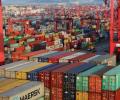
India's trade deficit reached a six-month high of $31.98 billion in July, driven by a sharp increase in imports, particularly crude oil, electronic goods, coal, and fertilisers. Both merchandise exports and imports recorded their second-highest levels during the same period.

Fitch Ratings has affirmed India's sovereign credit rating at 'BBB-' with a stable outlook, acknowledging robust growth prospects and strong external finances. However, the agency highlighted concerns over elevated government debt, lagging structural metrics, and potential fiscal spending pressures due to rising youth unemployment.

Chief Economic Advisor V Anantha Nageswaran has stressed the urgent need for India's financial sector to proactively address the safety and security risks of artificial intelligence, stating that waiting for problems to materialise is not an option.

A Parliamentary Standing Committee on Commerce has urged the Indian government to swiftly conclude the proposed India-US Bilateral Trade Agreement (BTA), while ensuring India's interests are protected, recommending complete exemption for key export products like generic medicines and smartphones from future US tariff increases.

Premature surrender and withdrawal of life insurance policies in India have surpassed maturity payouts over the past five years, indicating a growing trend of policyholders exiting long-term policies before their full tenure, according to data presented in the Lok Sabha.

The government maintained a strong pace of capital expenditure, which jumped nearly 24 per cent to Rs 3.40 trillion in April-June.

'Tariff action relating to the excess-capacity investigation will be even more susceptible to judicial overturn.'

India's public sector banks (PSBs) have seen their net profit nearly treble over the past five years, reaching a record Rs 1.98 trillion in FY26, driven by significant improvements in asset quality and sustained lending growth across key economic sectors.

RBI says polymer notes have a significantly longer lifespan, potentially reducing printing costs and replacement frequency.

India is waiting for assurance from the US on comparative advantage over other economies under the deal.

The International Monetary Fund (IMF) has reduced India's growth forecast for FY27 to 6.4 per cent, citing the potential impact of higher energy prices offsetting the country's economic resilience. Despite this, India remains among the fastest-growing major economies.
